
 902 views
 Last winter, I joined two weekly Zumba classes.
One instructor is from Taiwan. She looks exactly like what we expect a dance teacher to look like—fit, lean, no visible extra fat. Dancing with her, I always carried a quiet hope: maybe if I follow closely enough, my body will look like that too.
The second instructor couldn’t be more different.
The first time I walked into her class, I felt an unexpected sense of relief. She didn’t have a “perfect dancer’s body,” and somehow that immediately eased my own anxiety. Compared to her, I even thought, I am quite fit.
She’s from Brazil, and her music is pure Latin joy—rhythms that make you imagine palm trees, beaches, and people dancing barefoot under the sky. The energy in her class is infectious. Her classes are always full—twice the size of the first instructor’s—and she runs workshops all over the city.
At the beginning of every session, she casually shares updates about upcoming events. From these small moments, we learn she’s also a mom of two young children, constantly moving between school pickups, traffic, classes, and workshops.
What makes her unforgettable isn’t her résumé—it’s her presence.
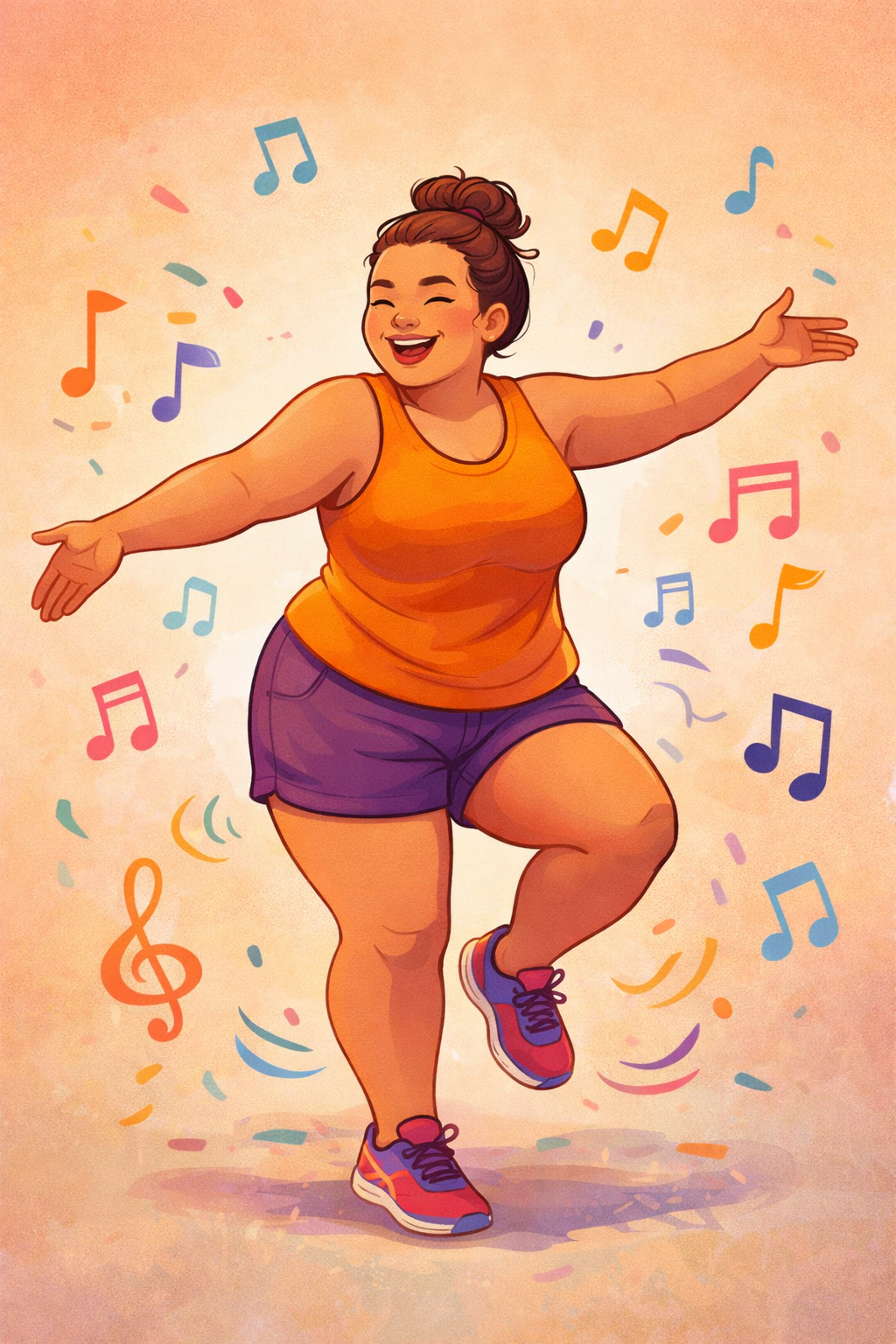
She wears bright colors—usually a tank top and tights, her hair tied up in a casual bun. She has a visibly full body—rounder arms, a soft belly, strong hips—and she makes no effort to hide any of it. When she dances, her whole body moves with the rhythm, freely and confidently.
At first, I was surprised. Then amused. And eventually, deeply moved.
What I was watching wasn’t imperfection—it was confidence.
She laughs loudly. She smiles constantly. She teaches with passion and warmth. She celebrates when we get the steps right and laughs with us when we don’t. She openly shares her frustrations too—like the time she drove 45 minutes to demo a 10-minute session, only to have it canceled by sudden rain. Or the chaos of being late because of traffic and school schedules.
She doesn’t perform perfection. She lives honestly.
We often expect fitness instructors to be proof that discipline leads to an ideal body. But when I look at myself—and at many women around me—I see something else: how harshly we judge our own reflections.
Friends go through plastic surgery. Others spend endless money trying to remove belly fat or tiny dark spots from already beautiful faces. One friend once told me she needed to lose 10 pounds before attending a reunion. She’s 5’4” and weighs 130 pounds—already slim by any reasonable standard.
Why are we so picky with ourselves? Why are we never satisfied?
Because deep down, many of us don’t fully accept—or love—ourselves. We measure ourselves by external standards. We worry about how we look through other people’s eyes.
That Zumba instructor doesn’t.
She cares about joy. About connection. About dance—not as a job, but as pure enjoyment. About whether her students are moving together, laughing together, alive together. That, I realized, is real confidence.
Around the same time, a close friend told me her daughter was devastated after her first school performance. She made a small mistake at the beginning and believed she had ruined everything.
I told her it took enormous courage to stand on stage in front of 300 people for the first time—that alone deserved celebration.
She sent me the video. I watched it carefully. There was a slight hesitation at the start, but the rest was beautiful.
I shared the story of my Zumba instructor with her. I told her how I believe that instructor’s happiness comes from self-acceptance. She doesn’t seem worried about her weight, her body, or her hectic life. She embraces it.
We lose so much happiness by constantly criticizing ourselves.
And that criticism doesn’t stay contained—it spills into our families.
Spouses pick at each other. Parents pick at children. Small imperfections become daily complaints. One friend once told me her husband criticizes her cooking eight times out of ten.
What’s the root of this constant picking? A lack of love.
I used to wonder how it was possible to “love your neighbor” or even “love your enemy,” as the Bible teaches, when many of us struggle to love ourselves. In a fast-paced world, we live in passive acceptance rather than wholehearted embrace. Responsibility replaces affection. Coexistence replaces connection.
Without love, no one truly lives fully.
Because when there is love, there is support and acceptance.
When there is love, there is less criticism.
When there is love, there is encouragement instead of judgment.
But love has to start somewhere.
It starts with loving yourself—fully accepting yourself, exactly as you are. You are the center of your own universe. When love radiates from there, you finally have the energy to love others.
Otherwise, self-criticism quietly becomes criticism of everyone else.
Self-love isn’t about getting everything right. It’s about accepting where you are—loving your effort, your small progress, your imperfect steps. Maybe the meal isn’t perfect. Maybe the weight hasn’t dropped. Maybe you’re learning something new and still stumbling. That’s okay.
When we can look at ourselves and smile—I’m learning. I’m growing. I’m doing my best—life feels lighter.
And sometimes, the most powerful lesson in self-love appears unexpectedly—not in front of a mirror, but in a Zumba class, led by someone who dances freely, exactly as she is.
When you begin to love and accept yourself, you naturally become gentler with others—less critical, less blaming, less picky. Love is a quiet but powerful force, and when it takes root, it begins to flow into every part of your life.

Leave a Reply